The NSVRC collects information and resources to assist those working to prevent sexual violence and to improve resources, outreach and response strategies. This page lists resources on this website that have been developed by NSVRC staff.
Develop effective messages about preventing sexual harassment, abuse, and assault that will resonate with different audiences with this guide. This guide, a joint publication between Berkeley Media Studies Group and NSVRC, provides recommendations on how to frame sexual violence, develop effective messages about prevention, and work with the media to inform and educate the public.
This example can help SARTs develop a logic model. This is not intended to be the only model for SART work, but it shows an example of what a final product might look like. SARTs are welcome to reference this model, create modifications, or draw upon it as a template when developing their own logic […]
This resource describes effective treatment for adult offenders, such as emotional regulation, family support networks, social skills training, and more. Publish Date
This resource discusses the potential risk factors and treatment targets that should be assessed when working with children. Publish Date
This resource includes adult risk assessment instruments as well as measures of protective factors. Publish Date
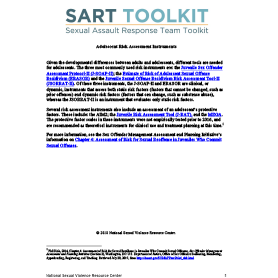
This resource provides a list of tools commonly used to determine adolescent risk and protective factors. Publish Date
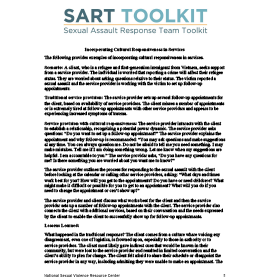
This resource provides examples of incorporating cultural responsiveness in services. Publish Date
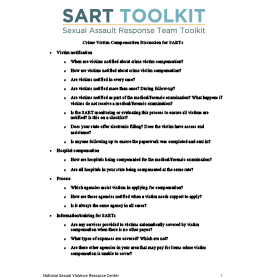
Sexual assault response teams can use this sample agenda for talking about victim compensation at a meeting. Publish Date
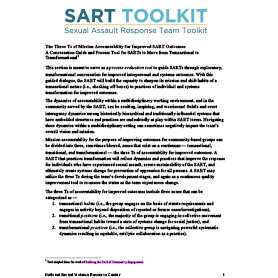
This tool helps guide SARTs from transactional habits to transformational practices. Publish Date
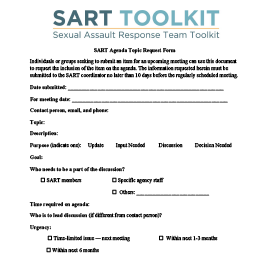
This document is easily adaptable for a SART that requires or chooses a formal way to submit meeting requests. Using something like this document or adapting this document to your local needs will ensure accountability and transparency to make sure all topics from all participants are included in a timely manner on agendas. Publish Date