These sessions provide attendees with a foundational understanding of the U.S. Department of Housing and Urban Development (HUD) Continuums of Care (CoC) and a practical understanding of the coordinated entry process. Information includes ways communities can design coordinated entry access points, trauma informed assessment and prioritization approaches, and data safety considerations. Participants posed questions and...
Sexual assault advocates and rape crisis centers can use this self-assessment tool to reflect on your current work serving men who have had unwanted sexual experiences. The tool offers reflection questions related to individual and organizational capacity to serve male survivors. This resource is part of Working with Male Survivors of Sexual Violence.
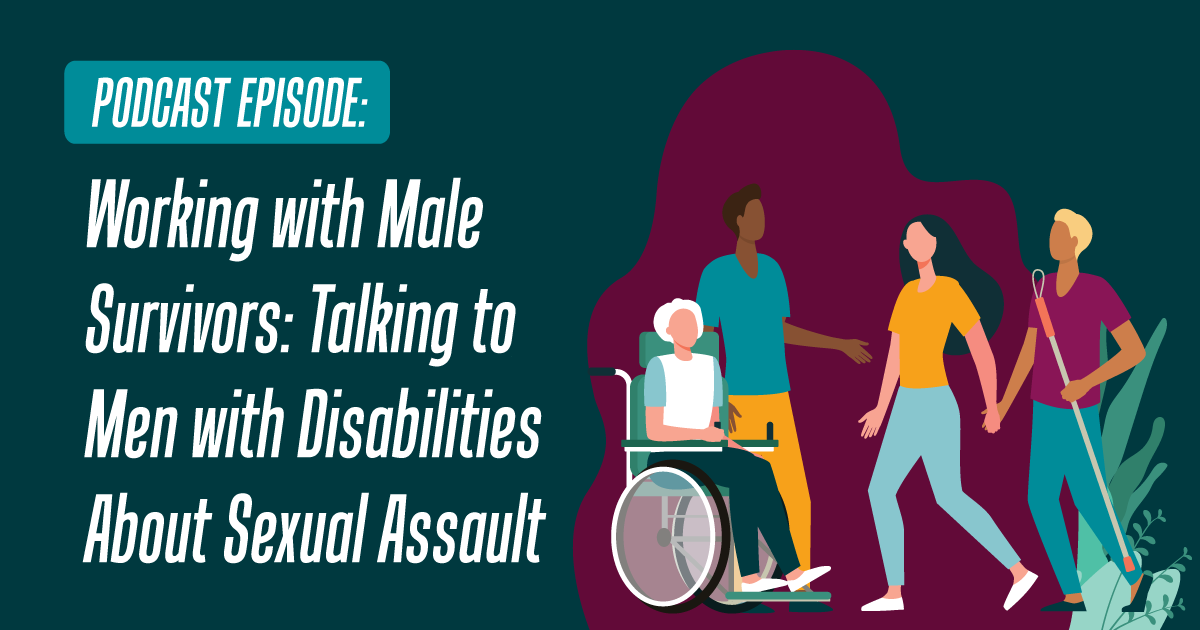
Leigh Ann Davis and James Meadours join us for a conversation on working with male survivors of sexual assault who have disabilities. They talk about tools they’ve worked on like the Talk about Sexual Violence Project, which educates health care providers on how to talk to men with disabilities about sexual assault; what advocates can...
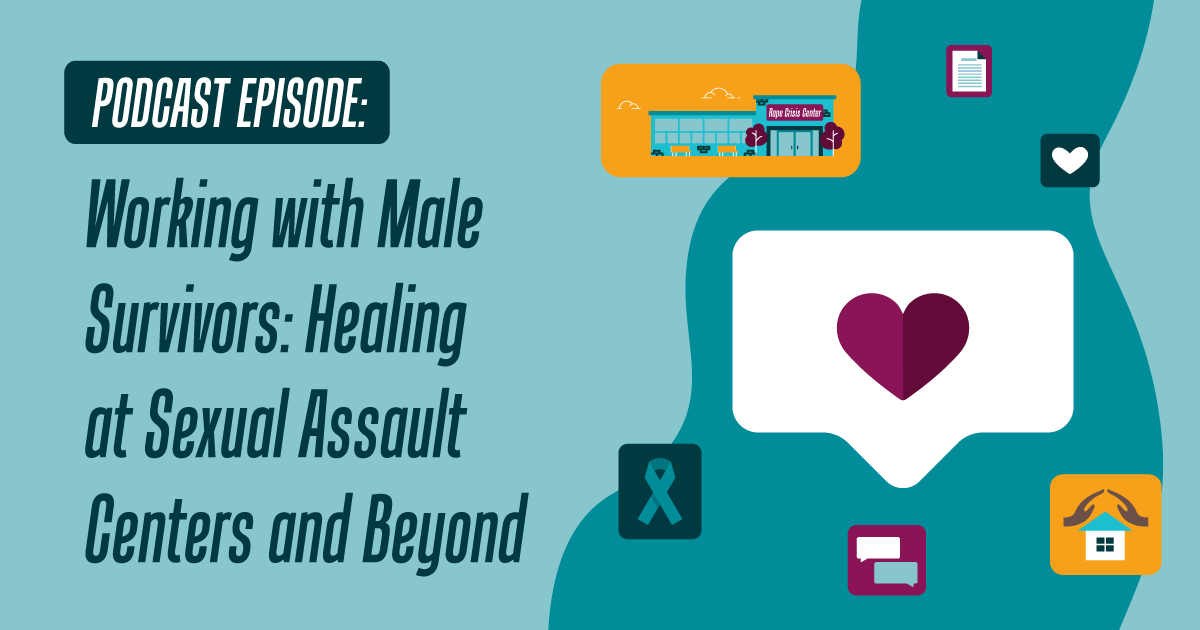
Sharon Imperato and Jim Struve join us for a conversation on working with male survivors of sexual assault. They share their history of collaboration, approaches to working with male survivors, and sexual assault center services that support men in healing from sexual trauma. Sharon is the Project Director of Clinical Training and Technical Assistance at...
How we talk about sexual violence matters. Whether you’re describing your center’s services to a friend, talking with a classroom of college students about preventing sexual harassment, or writing your agency’s newsletter, the words you use have an impact on how audiences understand those topics. They also have an impact on who sees themselves as eligible for your center’s...
Offering services that provide healing for our clients is one of the core functions of a sexual assault center. Maybe you’re seeking to provide services that are more relevant to the needs and experiences of male survivors, or maybe you’re noticing that not a lot of men are using the services your center provides. As...
Your sexual assault center will best serve the community when it has strong partnerships. Strong partnerships can lead to cross-training, where two or more organizations train each other on each of your areas of expertise. This can help ensure that everyone’s service delivery and community engagement is relevant to the people you’re trying to reach....
“Victim” and “survivor” can be words that men don’t relate to, despite their experiences. This may be the case for a person of any gender, but aspects of male socialization in particular make this language particularly distant. There is not a one-size-fits-all approach to choosing what language to use in reaching men in your community....
Nulla vitae elit libero, a pharetra augue. Nulla vitae elit libero, a pharetra augue. Nulla vitae elit libero, a pharetra augue. Donec sed odio dui. Etiam porta sem malesuada.